anzania was set to strengthen its domestic pharmaceutical manufacturing capacity following plans by Zinga Pharmaceutical Limited to establish a TSh 70 billion pharmaceutical factory in Bagamoyo District, Pwani Region. The proposed investment was expected to support local production of essential medicines, including antiretroviral drugs (ARVs) and antimalarial medicines, reducing the country’s dependence on imported pharmaceutical products.
- Zinga Pharmaceutical factory to manufacture essential medicines
- Factory to occupy 17,000 square metres in Bagamoyo
- Tanzania spent over TSh 200 billion annually importing medicines
- Six companies expressed interest in pharmaceutical manufacturing
- Local pharmaceutical production expected to reduce import dependence
The project was expected to be financed through a loan secured by UTT Asset Management and Investor Services (UTT AMIS), with construction scheduled to take approximately 18 months, depending on the availability and release of funds.
According to the announcement made during the project’s launch on 31 March 2017, the factory would be established in the Zinga area of Bagamoyo and was expected to contribute significantly to Tanzania’s pharmaceutical manufacturing industry.
Zinga Pharmaceutical factory to manufacture essential medicines
The proposed Zinga Pharmaceutical factory was intended to manufacture a range of essential medicines, particularly products that Tanzania relied heavily on imports to obtain.
The planned production included:
Antiretroviral medicines used in the treatment of HIV/AIDS.
Antimalarial medicines for the prevention and treatment of malaria.
Other essential medicines required by healthcare facilities.
Speaking during the project launch, Dr Mary Mayige, Director and Founder of the Zinga Pharmaceuticals factory project, said the investment would help transform healthcare delivery in Tanzania while reducing the financial burden associated with importing medicines.
The project was also expected to complement the government’s industrialisation agenda and contribute towards the country’s ambition of attaining middle-income economy status.
Dr Mayige explained that concerns over medicine shortages and the increasing availability of counterfeit pharmaceutical products were among the factors that motivated the establishment of the manufacturing facility.
Factory to occupy 17,000 square metres in Bagamoyo
The proposed pharmaceutical manufacturing facility was expected to occupy approximately 17,000 square metres of land in the Zinga area of Bagamoyo District, Pwani Region.
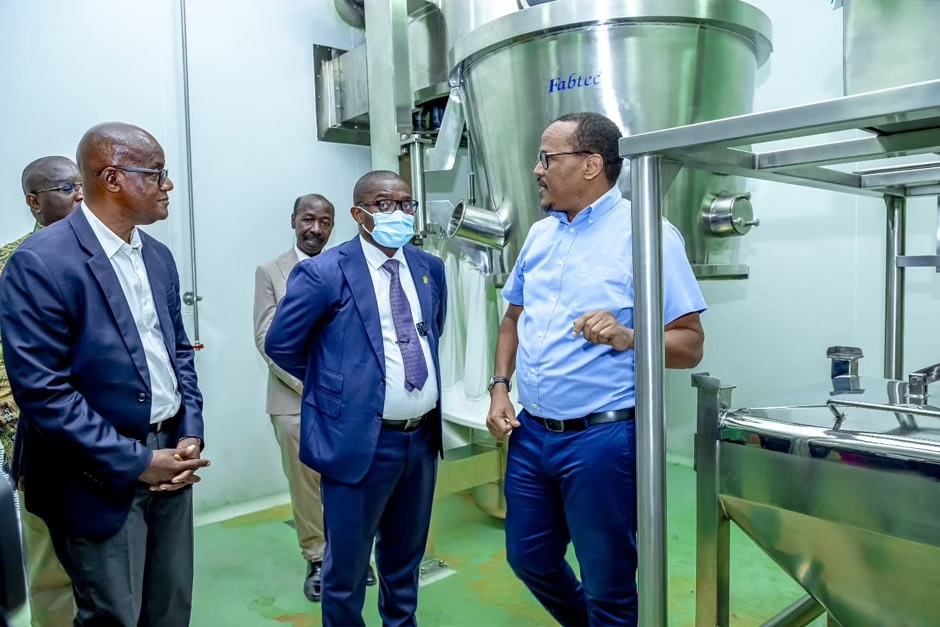
According to Dr Mayige, the factory would utilise advanced German manufacturing technology to produce high-quality medicines that met international standards.
The project was expected to have an annual production capacity of approximately 970 million tablets, including 120 million antiretroviral tablets.
The introduction of modern pharmaceutical manufacturing equipment was intended to improve production capacity and enable the company to manufacture medicines that could compete in both domestic and international markets.
The investment was therefore expected to create opportunities for Tanzania to strengthen its pharmaceutical manufacturing capabilities and expand access to locally produced essential medicines.
Tanzania spent over TSh 200 billion annually importing medicines
At the time of the announcement, Tanzania had approximately 13 pharmaceutical manufacturing industries, whose combined production capacity met only about 20 per cent of the country’s medicine requirements.
Consequently, the government spent more than US$100 million annually, equivalent to over TSh 200 billion, importing medicines from other countries.
Data from the Medical Stores Department (MSD) indicated that approximately 80 per cent of medicines used in healthcare facilities and all laboratory reagents used in the country were imported.
The dependence on imported pharmaceutical products exposed the healthcare system to supply challenges and increased the country’s expenditure on foreign medicines.
Without substantial investment in domestic pharmaceutical manufacturing, government projections indicated that medicine import expenditure could reach approximately US$350 million, equivalent to TSh 800 billion, by 2021.
The proposed Zinga Pharmaceutical investment was therefore considered an important step towards increasing local production and reducing reliance on imported medicines.
For more information about public medicine procurement in Tanzania, see the Medical Stores Department (MSD).
Six companies expressed interest in pharmaceutical manufacturing
The proposed Zinga Pharmaceutical factory was part of broader efforts to attract private investment into Tanzania’s pharmaceutical and medical manufacturing industries.
In November 2016, the Minister for Industry, Trade and Investment, Charles Mwijage, informed Parliament that six companies had expressed interest in investing in local pharmaceutical production and related manufacturing activities.
Among the prospective investors mentioned were:
JNS Solutions: Expected to invest in the production of intravenous (IV) fluids.
China Dalian International Economic Development Group Co. Limited: Expected to establish a medical equipment manufacturing facility.
Zinga Pharmaceutical Limited: Proposed manufacturer of essential medicines, including ARVs and antimalarial drugs.
Boryung Pharmaceuticals Co. Limited: A South Korean pharmaceutical company involved in antibiotic manufacturing.
Aga Khan Foundation Network: Identified among the prospective investors.
Hainan Hualon: Also mentioned among companies interested in pharmaceutical manufacturing.
These investment interests reflected growing private-sector attention towards Tanzania’s pharmaceutical industry and the opportunities associated with local production of medicines and medical supplies.
Local pharmaceutical production expected to reduce import dependence
The proposed TSh 70 billion investment was expected to contribute to Tanzania’s efforts to strengthen its pharmaceutical manufacturing sector.
Increasing domestic production could help reduce expenditure on imported medicines, improve the availability of essential pharmaceutical products and create opportunities for local employment and industrial development.
The planned production of ARVs and antimalarial medicines was particularly significant given the demand for these medicines within Tanzania’s healthcare system.
If implemented as planned, the Zinga Pharmaceutical factory would represent an important addition to the country’s pharmaceutical manufacturing capacity.