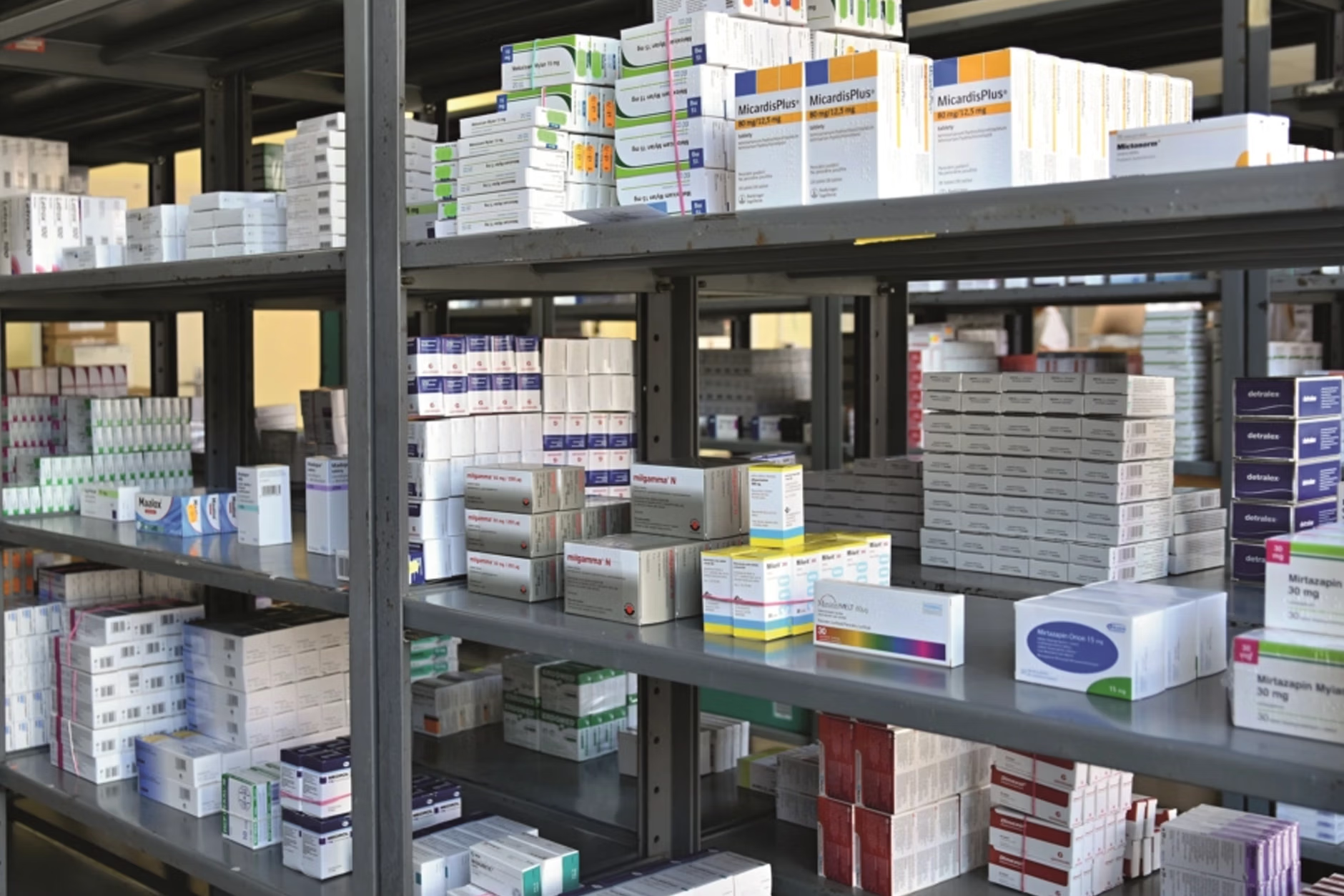
Anyone who wants to open a community pharmacy in Tanzania has to clear a fixed sequence of approvals, and the order matters more than most first-time owners expect. The Pharmacy Council of Tanzania approves the location before it will look at the building, and it expects a named pharmacist in charge before it issues a permit. Spend money in the wrong order and you may pay for a renovation the Council later asks you to undo.
- Step 1: Decide who will own the pharmacy and who will run it
- Step 2: Find a location that passes the distance rules
- Step 3: Apply for approval of location before you spend on the building
- Step 4: Fit out the premises to the Regulations
- Step 5: Register the premises and obtain the pharmacy permit
- Step 6: Budget for official fees
- Step 7: Keep the registration alive
- What to do first
This guide follows the sequence set by the Pharmacy (Premises Registration) Regulations, 2020 (Government Notice No. 269 of 2020), which govern community pharmacies. Wholesale pharmacies, accredited drug dispensing outlets (ADDOs) and clinics follow different rules and are not covered here. For a wider look at what to settle before committing capital, see our earlier piece on starting a pharmacy business.
Step 1: Decide who will own the pharmacy and who will run it
Ownership comes first because it shapes every document that follows. Under the 2020 Regulations a sole proprietorship is open only to a pharmacist. Partnerships, companies, joint ventures and associations can also own a pharmacy.
If the owner is not a pharmacist, the application must include the memorandum and articles of association that tie the business to a pharmacist. Owning the premises does not authorise anyone to supervise dispensing. That job belongs to the superintendent, a registered pharmacist in charge of the pharmacy.
The superintendent must hold a valid practising licence, sign a commitment letter and have an employment contract with at least one other pharmaceutical staff member. The Regulations list the absence of a Council-approved superintendent as a ground for suspending a pharmacy, so this person needs to be lined up before the permit stage, not after it.
Note that pharmacists, pharmaceutical technicians and pharmaceutical assistants are separate cadres with separate scopes of practice. Plan staffing with that in mind.
Step 2: Find a location that passes the distance rules
Regulation 4 sets the minimum distances a new community pharmacy must keep from other premises. The Council’s online application guide lists them as follows:
| From | Minimum distance |
|---|---|
| Nearest existing community pharmacy | 150 m |
| Unsuitable sites such as bars, fuel stations, garages, open sewers and dumpsites | 100 m |
| Laboratory | 50 m |
| National or zonal hospital | 500 m |
| Regional referral hospital | 400 m |
| District hospital | 300 m |
| Health centre or dispensary | 200 m |
The Regulations also bar a pharmacy from sharing premises with unsuitable or risky neighbours, and from flood-prone sites. Some exemptions exist, such as pharmacies separated by a highway or double tarmac road, or pharmacies on different floors of a shopping centre. The Registrar can also approve a site closer than 150 m from another pharmacy where a need for the service is shown.
Distance rules have been reported on before. Our 2022 coverage of a 500 m rule for pharmacies near public hospitals was based on a ministerial announcement, and the tiered distances above are what the Council’s current application guide states. Check the Council’s criteria on the day you apply, because the tiers decide which sites are viable.
Step 3: Apply for approval of location before you spend on the building
Location approval is a separate application. You complete the Approval of Location form (PCF.5a) on the Council’s online system, PCMIS, and pay the inspection fee by control number. A Council inspector then visits the site.
The Council’s guidance is explicit: do not start renovation or construction before this preliminary inspection. The Council has the final say on whether a location is suitable, and approval is valid for six months from the first inspection. Sign a lease only when you are confident the site will pass, and ask the landlord for flexibility on the start date if you can.
Step 4: Fit out the premises to the Regulations
Once the location is approved, the Registrar may direct you to build or renovate to specification. Regulation 5 requires a community pharmacy to have at least 30 square metres, divided into a display area, a dispensing room and a pharmacist’s office, with a single point of entry and an internal height of at least 2.5 metres.
Regulation 6 covers the finishing and environment. In summary:
- Interior and exterior in white, cream or another light colour.
- Access to prescription-only and controlled medicines restricted to pharmaceutical personnel.
- Storage protected from light, heat and dampness, with the temperature kept below 25°C using air conditioning or fans and a wall thermometer.
- A hand wash basin with running water and closed drainage.
- Secure shelving and pallets, plus a fire extinguisher that is checked regularly.
The Council’s inspection checklist for new premises also looks for lockable shelving for prescription and controlled medicines, a refrigerator, a dispensing window, strong grilled windows and basic dispensing equipment. It also expects record books to be in place: a prescription-only medicines register, a controlled drugs register, an expired medicines register and a complaints book, among others. Written cold-chain procedures and temperature records are part of the same list.
One caution on numbers. An older version of the checklist form shows lower minimum areas and a larger gap between pharmacies than the 2020 Regulations. Where documents differ, work to the Regulations and confirm the figure with the Council in writing.
Step 5: Register the premises and obtain the pharmacy permit
With the building ready, the premises registration application under regulation 7 needs:
- a lease or other occupancy agreement, or a certified title deed;
- a site plan and a floor plan;
- proof that the fee has been paid.
The permit application under regulation 10 adds the superintendent’s documents, the commitment letter, and the employment contract with at least one other pharmaceutical staff member. A non-pharmacist owner must also supply the contract in the Council’s prescribed format.
The Council inspects against its checklist and applies a fit and proper person test. Expect the inspector to compare what you built with the floor plan you submitted.
Other approvals sit alongside the Council’s. Businesses generally also need company registration with BRELA, a tax identification number from the Tanzania Revenue Authority, and a business licence from the local authority. Local requirements such as fire and environmental clearances vary, so ask the relevant council office what applies to your site. Retail pharmacies are not licensed by TMDA, which registers manufacturing and importing wholesale premises. Retail premises for human medicines fall to the Pharmacy Council.
Step 6: Budget for official fees
The Council’s fee schedule, published under the Pharmacy (Fees and Charges) Regulations (Government Notice No. 299 of 2012), lists these amounts for a new community pharmacy:
| Item | Amount (TZS) |
|---|---|
| Inspection for location approval | 100,000 |
| Premises registration | 150,000 |
| Business permit | 100,000 |
| Professional fee | 200,000 |
The professional fee is not payable when the owner is a pharmacist, pharmaceutical technician or pharmaceutical assistant. On these figures, official fees would total TZS 350,000 for a pharmacist owner and TZS 550,000 for another owner. These are published tariffs, not a business budget. Rent, fit-out, stock, salaries and working capital come on top, and they vary widely by location. Treat the schedule as dated, since it was issued in 2012, and confirm current amounts with the Council before you budget.
Step 7: Keep the registration alive
The registration certificate is valid for five years. The pharmacy permit is renewed every year before 30 June, and the Regulations allow renewal applications at least three months before expiry. Under the 2012 fee schedule, renewals paid after 31 July attract a 25% penalty.
Failure to renew a permit is an offence carrying a fine of at least TZS 1,000,000 or imprisonment of up to three months. A pharmacy can also be suspended if it stays closed for more than 90 days without notice. Moving premises, changing the name or transferring ownership all need the Registrar’s approval first, and relocation is treated as a new application.
What to do first
Start with the people, then the site. Confirm who the superintendent will be and what the ownership structure looks like, then request location approval before any lease is signed or any wall is painted. Once the pharmacy opens, stock control becomes the next pressure point, which we cover in our guide to managing pharmacy inventory.
Requirements change, and this guide reflects the published Regulations at the time of writing. Verify each step with the Pharmacy Council before acting, and keep written records of every approval you receive.
This article is general information for pharmacy professionals and prospective owners. It is not legal advice.